
Big companies have a problem. Every year brings increased competition. Customers demand speed, affordability, and high quality. The old playbook? It doesn’t meet the requirements anymore.
The Big Shift in Business Technology

Source: momnet.com
Remember when AI felt like something from a movie? Yeah, that was maybe ten years back. Walk into any Fortune 500 company now. AI runs through their operations like water through pipes.
Take a retail chain with stores coast to coast. Used to be they’d look at last year’s numbers and cross their fingers. Stock this much.
Hope it sells. Now? Computers chew through data all day long. Tomorrow’s weather is a factor in today’s inventory choices. A TikTok video about purple sweaters goes viral?
The system catches it. Inventory adjusts. Sales go up. Simple as that.
Breaking Down the Barriers
Here’s what changed everything. AI got cheap. Well, cheaper anyway. Remember when companies needed rooms full of servers? Million-dollar investments just to get started?
Forget all that. Cloud computing killed that model dead. Now you rent computer power by the hour. Like getting a rental car instead of buying a fleet.
Need more power this month? Click a button. Slow season? Scale it back. Pay for what you use.
And the tools have come a long way. Five years ago you needed programmers for everything. Now? Drag, drop, done.
A marketing manager can build a prediction model over lunch. No coding required. Wild stuff.
The Rise of Data-Driven Culture
Technology alone does not create transformation. Companies that benefit most shift how decisions are made. Data becomes the starting point for every conversation.
Leaders no longer ask what worked last year. They ask what the data shows right now. That mindset influences hiring, training, and daily workflows.
A few patterns define this shift:
- Teams rely on dashboards instead of static reports, allowing faster reactions to changes
- Decision cycles shorten because insights are available instantly
- Experiments replace long-term assumptions, reducing risk in new initiatives
Organizations that adopt this approach see consistent improvements. AI supports the process, but culture drives the results. Without that internal shift, tools remain underused.
Where the Magic Happens

Source: forbes.com
Customer service departments love this stuff. Chatbots handle the “where’s my order?” questions at 3 AM. Meanwhile, human agents tackle the messy problems.
The ones that need empathy and creative thinking. Wait times plummet. Customers actually get help when they need it.
Factory floors tell a different story but with the same happy ending. Machines talk to each other now. A bearing starts wearing out?
The system knows before anyone hears a squeak. Schedule maintenance for next Tuesday during the slow shift. No emergency shutdowns. No panicked calls on weekends.
Mass marketing is obsolete. AI finds patterns humans overlook. This customer bought running shoes in March? They’ll probably want new ones in September.
That one always clicks on sale emails but never pays full price? Wait for Black Friday to pitch them. Different customers require tailored messages.
Operational Efficiency at Scale
Efficiency gains do not come from one system. They come from multiple small improvements working together. Automation plays a central role.
Companies apply AI across different areas:
- Routine tasks like data entry and reporting become automated, freeing employees for strategic work
- Supply chains adjust dynamically based on demand forecasts
- Financial processes detect anomalies faster, reducing errors and fraud risk
Each improvement may seem small. Combined, they create measurable impact. Businesses report cost savings, better resource allocation, and increased productivity through AI adoption.
That is where growth becomes visible. Not from one big breakthrough, but from consistent optimization.
Finding the Right Partners

Source: linkedin.com
Most companies don’t go it alone on this journey. Too many ways to mess up. Too much money at stake. Smart enterprises connect with AI software development companies for enterprises that have been around the block.
Businesses can avoid a steep learning curve with the help of companies like Goji Labs.
They understand which methods are productive and which are not. They understand which leads to wasted effort.
When partners are good, ambitious ideas become operational systems that yield actual results.
Challenges Companies Cannot Ignore
Adoption is not always smooth. Many organizations struggle to see immediate returns. Some invest heavily without clear strategy.
Recent reports highlight this gap. Many companies adopt AI quickly, but only a portion achieve measurable outcomes.
Common challenges include:
- Lack of clear goals, leading to scattered implementation
- Data quality issues that reduce model accuracy
- Internal resistance from teams unfamiliar with new systems
Security also becomes a concern. Rapid adoption introduces risks if controls are not updated alongside technology.
Successful companies address these issues early. They treat AI as part of a broader transformation, not a quick fix.
The Road Ahead
Source: cplus.co.uk
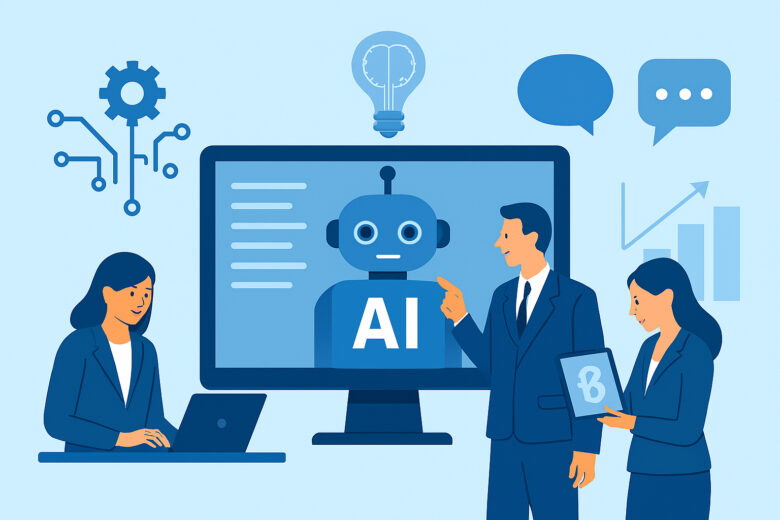
Technology keeps evolving. Language processing improves. Image recognition becomes more accurate. Predictive models gain precision.
However, tools alone do not guarantee success. Businesses still rely on people and processes. AI supports decisions, but humans define direction.
Future growth depends on alignment. Teams must understand how to use these systems effectively. Leadership must set clear priorities. Execution must remain consistent.
Organizations that integrate AI into everyday workflows gain the most value. Others remain stuck experimenting without clear outcomes.
You also asked:
1. How long does it typically take for a company to see results from AI adoption?
Most companies start seeing early efficiency gains within a few months, especially in areas like automation or customer support.
However, measurable financial impact takes longer. Research shows that only a small percentage of companies report clear profitability improvements in the first year of adoption.
The timeline depends on three factors. First, how well the company defines its use cases. Second, the quality of its data. Third, how quickly teams adapt to new workflows.
2. Which business areas benefit the most from AI in enterprises?
AI delivers the strongest impact in functions that rely heavily on data and repetition. Studies consistently point to a few areas where results are most visible:
- Marketing and sales benefit from better targeting and personalization, which directly influences revenue
- Customer support improves through automation and faster response times
- Product development and strategy gain value from predictive insights and trend analysis
Large-scale surveys confirm that marketing, sales, and product development are among the top areas where companies report revenue gains from AI adoption.
3. Why do some companies fail to get value from AI despite heavy investment?
The issue is rarely the technology itself. Most failures come from execution problems. Many companies adopt AI tools without a clear plan. Others underestimate the importance of internal processes and training.
Research shows that a large portion of organizations struggle to scale AI or demonstrate clear value, even after adoption.
Conclusion

Source: forbes.com
Intelligent technology stopped being optional. Competitive pressure makes that clear. Companies that adapt move faster and make better decisions.
The difference lies in execution. Some organizations invest and wait for results. Others redesign how they operate. They train teams. They test ideas quickly. They refine processes continuously.
The gap between those groups is growing. Businesses that commit fully to transformation move ahead. Those that hesitate fall behind.
Growth today depends on how well companies use intelligent systems. Not as tools on the side, but as part of how the business runs every day.