
Automated traffic used to feel like a side issue, something teams handled with a few firewall rules and a quiet note in the weekly security report. That era ended. Casino platforms now see bot activity as a behavioral force that touches almost every risk signal, from authentication to session quality to how promotions get priced.
The most important shift sits inside analytics: the definition of a “real user” keeps moving, and every adjustment changes the story the data tells.
For experienced operators, the challenge rarely comes from spotting obvious abuse. The harder work comes from separating high-intent automation from ordinary friction, then updating models fast enough to keep product decisions grounded in reality.
Bot traffic reshapes risk models because it reshapes the measurement layer those models depend on. When measurement changes, every decision downstream changes too.
Secure Platforms Set the Baseline for Trustworthy Risk Analytics

Source: financialcrimeacademy.org
Risk models only work when the platform’s security controls produce clean, reliable signals. Security keeps accounts safe, yet it also protects the data pipeline that powers segmentation, fraud scoring, and player lifecycle management.
When bot traffic slips through, teams lose trust in the relationship between action and intent. That uncertainty forces overcorrection, and overcorrection creates its own costs in friction and false positives.
A secure online casino platform builds its risk posture into the user journey. That means strong identity and device checks, resilient session controls, and defensive design around the edges where automation likes to live.
Security also supports the basic question every risk team needs to answer: did a person choose this action, or did a script manufacture it?
In practice, mature operators treat security as product infrastructure. A platform like JackpotCity works as a useful example in this context, since well-known brands tend to invest in layered protection that supports both customer safety and stable analytics.
The point is not the logo. The point is the standard. When security creates consistent telemetry, risk models can focus on behavior rather than constant cleanup.
Bot Traffic Now Shapes Product Design, Not Only Back-End Controls
Source: clickcease.com
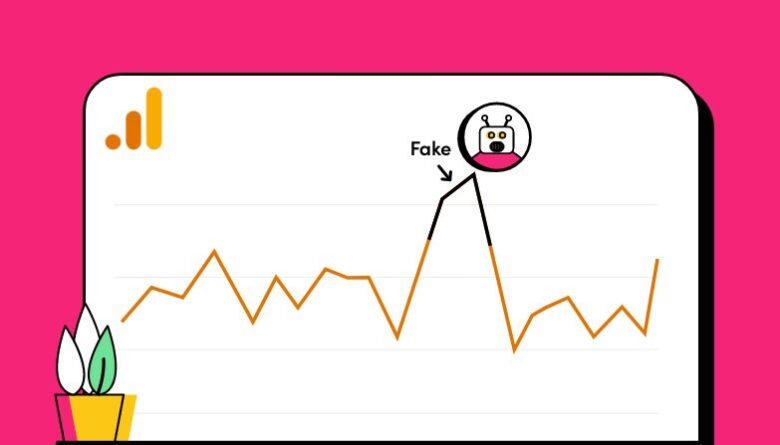
Bot detection used to sit behind the scenes. Now it influences the product itself because automation targets product features, not only login pages. Anything that creates advantage at scale draws scripts: bonus flows, loyalty mechanics, cashier steps, and even search and navigation patterns that reveal what the platform values.
This pushes teams toward design choices that reward genuine engagement while limiting machine repetition. The best examples look subtle to users. They use step-up verification at moments of unusual velocity. They tune rate limits based on context rather than blunt caps. They add small interaction proofs that feel natural during higher-risk actions.
Two effects follow. First, product teams start treating “friction” as a dial, not a permanent barrier. Second, risk teams gain a new role in design reviews because the shape of the funnel determines what bots can exploit.
That collaboration matters because a bot problem rarely stays contained. It moves from promo abuse into payments, then spills into customer support, and the platform ends up paying for it in operational load.
Rethinking “Real Users” Inside Analytics and Risk Scoring
Bots distort metrics in ways that confuse even experienced analysts. The distortion often looks like growth, better conversion, or strong retention, and it can fool dashboards for long stretches.
A risk model trained on polluted data learns the wrong patterns. It can mislabel genuine users as suspicious while letting automation blend in.
Teams now define “real users” with a multi-layer context rather than a single identity check. They combine device stability with interaction texture, then add temporal patterns that show how behavior evolves across sessions.
Skilled bot operators know how to mimic clicks. They struggle more when a model looks at how intent unfolds, how payment behavior correlates with navigation, and how a user responds to micro-friction.
A practical way to frame this is to treat automation as a spectrum. Some bot traffic scrapes pages and tests endpoints. Some automates account creation.
Some run promo loops with human support. Risk models work better when they score behavior with that spectrum in mind. The goal becomes classification that guides action, not a binary label that triggers blunt blocks.
Modern Detection Stacks, What Works When Bots Adapt Quickly

Source: kaspersky.com
Bot defenses fail when they rely on one signal and keep it static. Strong programs stack signals, then rotate tactics as attackers learn the rules.
They also measure success in the language of operations: fewer support escalations, cleaner promo spend, and more stable risk outcomes.
Two building blocks keep showing up in mature stacks:
- Behavioral analysis tied to session integrity, which focuses on interaction cadence, navigation logic, and consistency across device signals.
- Adaptive challenges and step-up checks, triggered by risk context like velocity spikes or unusual clustering in referral patterns.
The strongest teams also treat detection as an engineering discipline. They run controlled experiments, they version rules like software, and they require documentation for model changes so stakeholders understand why rejection rates moved.
That discipline matters because both pressures often increase during product changes. A new promotion, a new payment option, or a redesigned sign-up flow can create a fresh attack surface overnight.
Cybercrime Growth in the US Raises the Stakes for Operators

Source: maryville.edu
The rise of cybercrimes in US markets changes the cost of getting bot traffic wrong.
Attackers increasingly treat online platforms as infrastructure for broader fraud, and casino services sit in a high-value zone because they combine identity, payments, and incentives.
Automated traffic plays a role in credential testing, account takeover preparation, synthetic identity workflows, and the monetization loops that follow.
This environment pushes operators toward tighter coordination across security, fraud, compliance, and product.
It also increases the importance of external partnerships, including payment providers and identity services, since threat signals often appear across systems.
When bot activity connects to broader cybercrime patterns, an operator needs faster escalation paths and clearer incident playbooks. The objective becomes containment with minimal disruption, and that depends on accurate detection paired with calm operational execution.
US-focused operators also face pressure from customer expectations. People want smooth access and quick resolution when something looks wrong.
Platforms that handle bot-driven abuse poorly end up creating friction for legitimate customers, which harms trust even when the underlying issue started with automation.
Where Risk Models Go Next
Source: pmstudycircle.com
Bot traffic will keep reshaping casino risk models because automation keeps evolving with product incentives.
The path forward centers on tight feedback loops. Models need cleaner training data, product teams need risk-aware design, and security teams need detection that adapts without creating constant chaos.
The operators who handle this best treat “real users” as a measurable concept rather than a slogan.
They invest in signals that reflect intent, they tune friction with purpose, and they keep their risk models honest by testing assumptions against live behavior. That combination turns bot pressure into a forcing function for better systems, and better systems produce decisions that hold up under scrutiny.