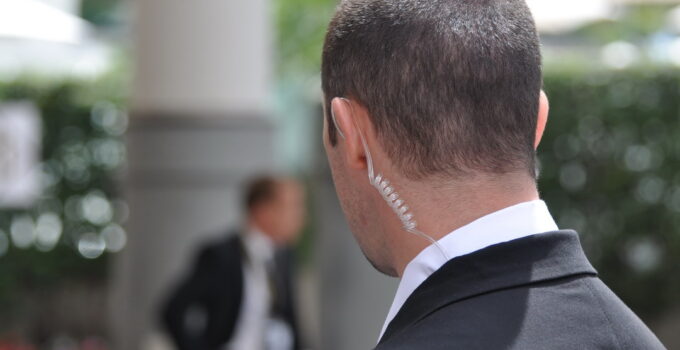
For many organizations, the phrase “executive security” still brings to mind a narrow set of protective measures: close protection, secure transportation, access control, and response planning. Those functions still matter. But the risk environment surrounding executives has changed, and physical protection alone is no longer enough.
Today’s executives operate in a world where visibility creates exposure. Their travel, public appearances, business decisions, online presence, family information, and corporate affiliations can all contribute to their risk profile. A threat may begin online before it becomes physical. A corporate decision may trigger activist attention. A travel itinerary may become more sensitive because of geopolitical conditions, labor disputes, litigation, or public scrutiny.
Modern executive security has to account for all of this.
It is no longer just about protecting a person at the point of contact. It is about understanding the conditions around that person before risk escalates.
The Executive Risk Environment Has Changed
Executives are more visible than they were a decade ago. Public company leaders, founders, board members, family office principals, and high-net-worth individuals often have digital footprints that extend across professional networks, media coverage, social platforms, public records, event listings, and corporate websites.
That visibility creates opportunity for adversarial attention.
A high-profile executive may be targeted because of wealth, corporate role, public statements, industry affiliation, political exposure, litigation, layoffs, acquisitions, controversial investments, or geographic movement. In some cases, the executive is not the only concern. Family members, residences, personal information, vehicles, routines, and online activity may also become part of the broader exposure picture.
This makes executive security more complex than traditional physical protection.
A security detail can respond to a visible threat. But it cannot, by itself, identify every early warning signal that may appear across digital, physical, corporate, and reputational environments.
That is where intelligence becomes essential.

Source: unifiedsecurityguard.com
Physical Protection Is Only One Layer
Physical protection remains important, especially for executives who face credible threats, frequent travel, public appearances, or elevated personal exposure. Secure transportation, route planning, site advances, access control, and protective personnel can all reduce risk.
But those measures are strongest when they are informed by intelligence.
Without intelligence, physical protection can become reactive. Teams may be prepared to respond to an incident, but less equipped to anticipate why the risk is emerging, where it may appear, or how it connects to broader conditions.
For example, an executive attending a public event may face different risks depending on recent company announcements, online chatter, local protest activity, employee sentiment, activist interest, or the visibility of the event itself. A standard security plan may cover the venue, routes, and access points. An intelligence-led plan also considers the surrounding context.
That distinction matters.
The goal is not simply to protect an executive once a threat is present. The goal is to reduce the likelihood of unnecessary exposure in the first place.
Executive Security Now Requires Intelligence
Executive security intelligence brings structure to a fragmented risk environment.
It helps organizations understand who may be exposed, why they may be exposed, what conditions are changing, and which signals deserve attention. This may include reviewing open-source information, assessing digital exposure, monitoring public threat indicators, evaluating travel risk, analyzing local conditions, and identifying patterns that could affect the executive’s safety or privacy.
Red5 Security provides intelligence-led executive security support focused on risk assessment, threat interpretation, and decision support for organizations, executives, and high-profile individuals.
This kind of approach moves executive security upstream.
Instead of waiting for a visible threat, organizations can assess risk earlier. They can identify vulnerabilities, adjust travel plans, strengthen privacy, brief internal teams, coordinate protective resources, and make more informed decisions about where and when additional security measures are needed.
The value is not just more information. Most organizations already have more information than they can interpret efficiently.
The value is context.

Source: unsplash.com
Digital Exposure Can Become Physical Risk
One of the biggest changes in executive security is the connection between digital exposure and physical risk.
An online threat may seem isolated until it is connected to a public appearance. A social media post may reveal travel timing. A data broker listing may expose a home address. A hostile forum discussion may indicate escalating attention. A public calendar entry may create unnecessary predictability.
Digital signals do not always become physical threats. Many remain noise.
But some deserve closer review.
The challenge is knowing the difference. Security teams need the ability to assess whether a signal is credible, whether it reflects intent, whether it is connected to a known event or location, and whether it changes the executive’s exposure.
This is why executive security cannot be separated from protective intelligence. The digital environment often provides early indicators that can inform physical security planning.
Reputation, Continuity, and Safety Are Connected
Executive security also has organizational implications.
When an executive faces a security issue, the impact may extend beyond personal safety. It can affect business continuity, investor confidence, employee morale, public perception, and leadership stability. A poorly handled incident can quickly become a wider corporate concern.
This does not mean executive security should be treated as public relations. It means organizations should understand that executive exposure can create operational and reputational consequences.
A strong executive security program helps reduce avoidable disruption. It allows organizations to identify risks earlier, prepare for public appearances, evaluate travel conditions, protect sensitive personal information, and coordinate internal stakeholders before a situation becomes more difficult to manage.
The most effective programs are not built around fear. They are built around visibility, judgment, and timely decision-making.

Source: personalprotectionsolutions.us
Decision Support Is the Real Value
Modern executive security is increasingly a decision-support function.
Security leaders, corporate teams, family offices, and executive staff need more than alerts. They need informed guidance. They need to know which risks matter, which do not, what has changed, and what practical steps should be taken.
Should the executive travel as planned? Should a public appearance be adjusted? Is additional protection warranted? Does online activity suggest real-world concern? Has personal information been exposed? Are there local conditions that change the risk profile?
These questions require analysis, not assumptions.
That is the central difference between reactive protection and intelligence-led executive security. One responds to the situation in front of it. The other helps organizations understand the risk environment before decisions are made.
The Future of Executive Security Is Proactive
Executive security is no longer just physical protection.
It is a coordinated approach to risk visibility, protective intelligence, privacy, travel assessment, threat monitoring, and operational decision-making. Close protection may still be part of the solution, but it is only one layer of a broader security model.
As executives become more visible and risk moves more quickly across physical and digital environments, organizations need a more proactive approach. They need to understand exposure before it becomes a threat. They need to connect early warning signals with practical security decisions. They need to protect not only the executive, but also continuity, privacy, and organizational stability.
The strongest executive security programs are built before an incident occurs.
They begin with intelligence.