
Choosing between the pitch and the pixel might seem like a big jump, but when you look closer, you are really exploring two versions of the same thrill.
Whether you are backing a striker on the grass or a sniper on a digital battlefield, the core excitement feels remarkably familiar.
The world of competitive prediction is evolving fast. Digital arenas now sit comfortably beside packed stadiums and you no longer have to pick one over the other.
A number on your screen is never just a number. For you, it represents form, momentum, preparation and the drama waiting to unfold.
The Shared DNA of Competition

Source: yougov.com
When you compare the odds for a Champions League final and a Counter-Strike Major, the structure looks surprisingly alike.
That’s because the foundation behind them is built on the same competitive principles. You are always searching for rhythm, chemistry and momentum. So are the bookmakers.
Prices move for similar reasons in both spaces. A star player gets sidelined.
A team hits a hot streak. Confidence shifts. You can see the same pattern whether it is a soccer squad returning from a draining away trip or an esports roster flying across continents for back-to-back tournaments.
Fatigue matters in both cases. Your edge comes from spotting where that exhaustion might turn into a costly mistake.
At its core, competition respects preparation and consistency. It does not matter if the battleground is grass or a screen.
Why Data Tells a Different Story
With traditional soccer, you have decades of history to lean on. You might know how a team performs in rainy conditions or how they traditionally fare against a specific rival.
That long timeline creates a sense of comfort and familiarity. You can trace patterns across seasons.
In the digital arena, everything moves faster. You are not analysing what happened twenty years ago.
You are looking at last week’s tournament. A team can shift from underdog to favourite in just a few events. Momentum builds and collapses quickly.
Physical endurance defines soccer. Ninety minutes of positioning, pressing and patience decide outcomes. In esports, reaction speed and mental stamina take centre stage.
When you place a sport bet in the digital world, you are evaluating reflexes, communication and split-second decisions. It is a different tempo, but the stakes feel just as real.
A Digital Curveball
Soccer’s rules rarely change. A goal remains a goal. While tactics evolve, the framework stays steady. In esports, however, developers regularly update the game itself.
Imagine if the size of a soccer goal changed every month or the ball suddenly felt heavier. That is essentially what a “patch” does in competitive gaming.
For you, this adds another layer of analysis. Strategies that worked last week might suddenly lose power. A player’s favourite character could be adjusted.
Tiny mechanical tweaks can shift the entire balance of play.
This means a sport bet on a dominant favourite is not always as straightforward as it appears. You must determine whether the current version of the game still aligns with that team’s strengths.
In soccer, a tactical identity develops over time. In esports, it can shift overnight with a software update.
Human Elements in the Machine

Source: globalgolfteacherscup.com
It is easy to think of gaming as purely technical, but you are still backing people. Behind every controller is a competitor dealing with pressure, expectation and emotion.
In soccer, eleven players share responsibility. In many esports titles, teams are smaller. If one individual struggles mentally, the impact can ripple through the entire lineup.
The psychological side becomes incredibly visible.
You have seen soccer teams defend deeply to protect a lead. In gaming, frustration can lead to “tilting,” where errors compound quickly.
Odds react in real time to these emotional swings. Your ability to read confidence, communication and composure can give you an advantage that raw statistics cannot capture.
What makes this even more compelling is how quickly momentum can shift when emotions take control.
A single missed opportunity, a misread play or a breakdown in communication can change the tone of an entire match within seconds.
Unlike traditional sports, where there may be natural pauses to reset mentally, competitive gaming often moves at relentless speed.
That intensity amplifies stress. When you pay attention to body language on player cams, listen to voice comms or notice subtle hesitation in decision-making, you begin to see patterns.
Confidence fuels precision, while doubt introduces delay. Recognising those human signals allows you to anticipate swings before the numbers fully reflect them.
The Rhythm of the Season
With soccer, you know when the seasons are starting, when the breaks are coming and when the final games are scheduled.
This allows you to take a long-term approach to your expectations. You can watch your team build over time, deal with injuries over time and develop rivalries over time.
If you watch a team from the beginning of the season to the end, you are seeing a story that is progressing with a sense of purpose and patience.
In esports, you see something closer to a festival atmosphere. There are events happening all the time, sometimes overlapping or extending late into the night.
There are always opportunities to make a sport bet, but this means you must stay disciplined. You cannot simply take a long-term approach to your betting strategies.
This is because the scene shifts from town to town, with players adjusting quickly.
This makes for a thrilling experience, but it also means you must stay sharp and realise what is really important.
Finding Your Own Edge
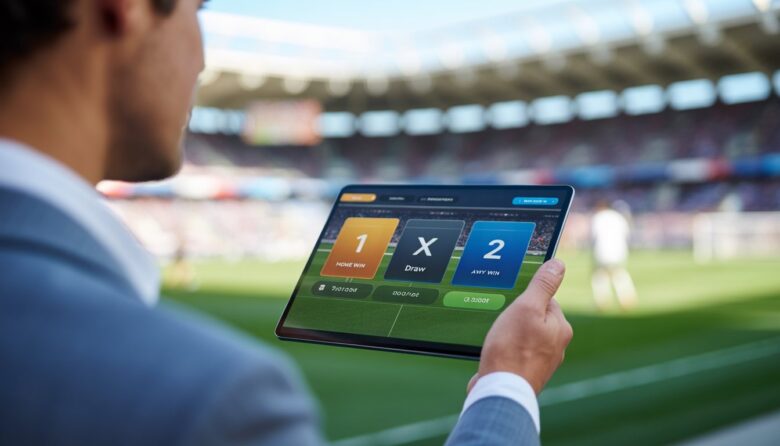
Source: betdaqtips.com
Ultimately, your preference depends on how you like to think. If you enjoy tradition, history and slow-building narratives, the soccer pitch may feel like home.
If you thrive on rapid evolution and strategic shifts, the digital arena offers endless intrigue.
Both worlds are more accessible than ever. You have more broadcasts, more statistics and more insights at your fingertips.
Whether you are following a historic club or an emerging esports organisation, the objective stays the same: understand the game better than the person setting the price.
The deeper you immerse yourself in either culture, the sharper your instincts become.
And when you approach each sport bet with insight and discipline, the pitch and the pixel begin to feel less like opposites and more like parallel paths to the same competitive thrill.