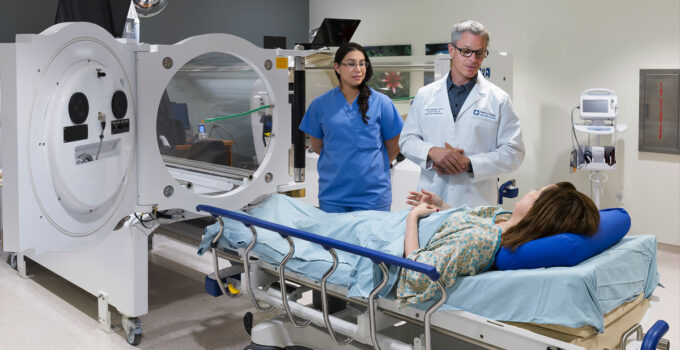
Have you ever looked at your smartwatch after a tough workout or a bad night’s sleep and wondered what those numbers really mean for your recovery? Heart rate variability, resting heart rate, blood oxygen saturation, sleep stages. We collect more health data than ever, yet many people still struggle to connect the dots between how they feel and what their body is doing behind the scenes.
That gap becomes especially interesting when hyperbaric oxygen therapy enters the picture. Hyperbaric chambers aim to support recovery at a cellular level, while wearables track external signals that reflect internal changes.
Put the two together, and suddenly recovery becomes something you can observe, compare, and understand rather than just guess.
This article looks at how hyperbaric chambers and modern wearables work together to track recovery before and after sessions in a meaningful, practical way.
How hyperbaric chambers support recovery at a physiological level
Source: rcvri.co
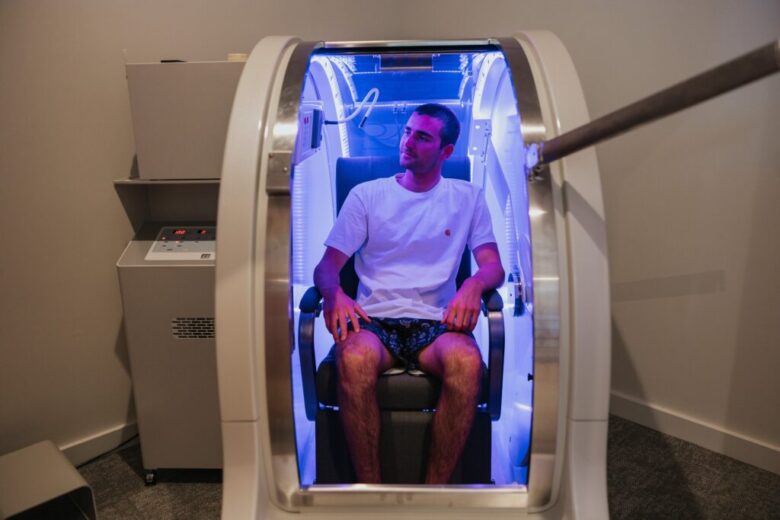
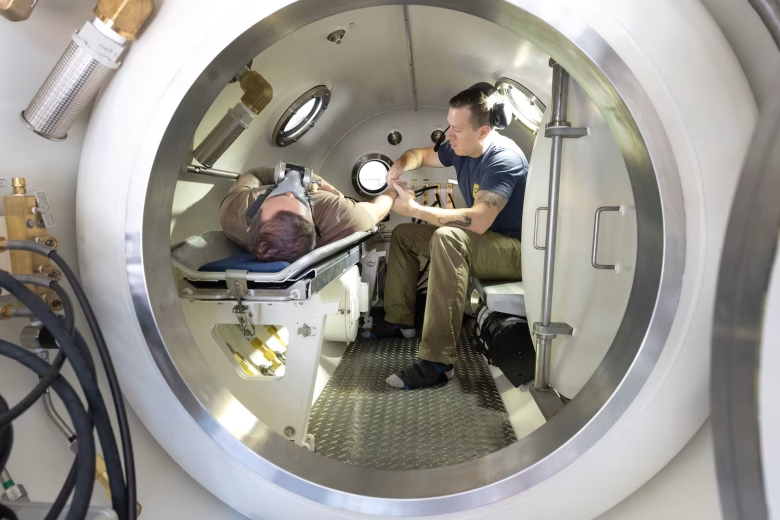
Hyperbaric oxygen therapy works by delivering oxygen at higher-than-normal atmospheric pressure, allowing more oxygen to dissolve directly into the bloodstream. This increased oxygen availability supports tissue repair, reduces inflammation, and helps stressed cells function more efficiently. Athletes, biohackers, and people managing chronic fatigue often turn to hyperbaric chambers because recovery feels deeper and more complete after consistent sessions.
What makes this therapy especially interesting today is not just how it works, but how measurable its effects can be. When tissues receive more oxygen, the nervous system often shifts toward a calmer state. Circulation improves. Cellular energy production increases. These changes do not always feel dramatic right away, but they influence markers that wearables are designed to track. Recovery stops being purely subjective and starts leaving a digital footprint that users can analyze over time.
Why wearables have become essential recovery tools
Wearables have evolved far beyond simple step counters. Modern devices continuously monitor metrics that reflect how well the body is handling stress and restoring balance. For people using hyperbaric chambers, this data provides context and feedback that was not available a decade ago.
Most wearables focus on a few core signals that matter for recovery:
- Resting heart rate trends that indicate overall cardiovascular strain
- Heart rate variability, often linked to nervous system balance
- Sleep duration and sleep stage distribution
- Blood oxygen saturation during rest and sleep
Individually, these metrics offer clues. Together, they create patterns. Before hyperbaric sessions, many users notice elevated resting heart rates or suppressed heart rate variability, signs that the body is under load. Tracking these markers consistently makes it easier to recognize when recovery is lagging and when interventions like hyperbaric therapy may help.
Combining hyperbaric therapy with data driven recovery tracking

Source: psychiatrictimes.com
When hyperbaric therapy is paired with wearable data, recovery becomes something you can follow rather than assume. This combination is especially valuable in places where structured recovery programs are common, such as wellness focused clinics offering oxygen therapy Los Angeles services that attract athletes, executives, and people managing high stress lifestyles.
By reviewing wearable data before starting sessions, users can establish a baseline. After sessions, changes become easier to spot. Some people see improved sleep scores the same night. Others notice heart rate variability trending upward over several days. These shifts do not guarantee outcomes, but they provide feedback that helps users decide whether hyperbaric therapy is supporting their recovery goals. The therapy and the data work together, each adding meaning to the other.
Key wearable metrics to monitor before and after sessions
Not all wearable metrics respond the same way to hyperbaric sessions. Focusing on the right ones helps avoid information overload and keeps tracking practical.
The most useful signals tend to be:
- Heart rate variability, often increasing as recovery improves
- Resting heart rate, which may decrease with better autonomic balance
- Sleep efficiency, including reduced nighttime awakenings
- Blood oxygen saturation during sleep, especially for people with breathing related issues
It is important to look at trends rather than single readings. A one day spike or drop rarely tells the full story. Hyperbaric therapy often works cumulatively, so wearables are most helpful when data is reviewed weekly or monthly. This approach aligns recovery expectations with how the body actually adapts over time.
What changes users often notice in wearable data after sessions
Many people report feeling calmer or more clear headed after hyperbaric sessions, but wearables sometimes reveal subtler changes that take longer to feel. These data shifts can validate the experience or highlight areas that still need attention.
Commonly observed patterns include gradual increases in heart rate variability over several sessions and more consistent sleep duration across the week. Some users notice that their resting heart rate stabilizes, especially during sleep, suggesting reduced physiological stress. These changes do not happen overnight, and they vary between individuals. The value lies in having objective markers that confirm recovery is moving in the right direction, even when daily energy levels fluctuate.
Did you know?
Heart rate variability reflects how well the nervous system adapts to stress and recovery. Higher variability is generally associated with better resilience, not simply better fitness.
A simple comparison of recovery signals before and after sessions
Looking at recovery through a table can make patterns easier to understand, especially for users new to tracking. Below is a simplified example of how key metrics may shift with consistent hyperbaric sessions.
| Metric | Before sessions | After multiple sessions |
| Resting heart rate | Slightly elevated | More stable or lower |
| Heart rate variability | Suppressed or inconsistent | Gradual upward trend |
| Sleep efficiency | Fragmented sleep | Longer deep sleep phases |
| Morning readiness score | Variable | More consistent |
These changes do not represent guarantees or medical claims. They illustrate typical trends reported by users who combine hyperbaric therapy with wearable tracking. Reviewing this data alongside how you feel physically and mentally provides a fuller picture than relying on numbers alone.
Interpreting data without becoming obsessed by numbers
One of the biggest mistakes people make with wearables is treating every fluctuation as a verdict on their health. Recovery data should guide decisions, not create anxiety. Hyperbaric therapy works best when the body is supported, not pressured into performing.
It helps to set clear tracking intentions. Decide which two or three metrics matter most and ignore the rest. Review trends weekly rather than checking constantly. If numbers dip temporarily, consider context such as stress, travel, or illness before drawing conclusions. Hyperbaric chambers are a tool, not a shortcut, and wearables are mirrors, not judges. When used together with a calm mindset, they encourage better recovery habits rather than perfection chasing.
Who benefits most from pairing hyperbaric chambers and wearables
Source: navsea.navy.mil
Not everyone needs this level of tracking, but certain groups find it especially valuable. Athletes appreciate objective recovery markers between training blocks. Busy professionals use data to confirm whether stress management strategies are working. People recovering from illness or injury gain reassurance when they see gradual improvements, even on days when progress feels slow.
Wearables also help users decide session frequency. If recovery markers improve and stabilize, sessions may be spaced out. If data plateaus or declines, it may signal the need for rest, nutrition changes, or professional guidance. This feedback loop makes hyperbaric therapy more personalized and less guesswork driven.
Making recovery tracking part of a sustainable routine
The real power of combining hyperbaric chambers and wearables lies in consistency. Sporadic sessions and random data checks rarely reveal meaningful patterns. Sustainable routines do.
Start with a baseline week of wearable data before your first session. Keep lifestyle factors as consistent as possible. After sessions begin, note both data changes and subjective feelings like energy, focus, and sleep quality. Over time, the story becomes clearer. Recovery stops being a vague concept and becomes a process you can observe, adjust, and respect.
In the end, hyperbaric chambers and wearables are not competing tools. They complement each other. One works internally by supporting oxygen delivery and cellular repair. The other reflects external signals that show how well the body is responding. Together, they turn recovery into something visible, understandable, and far more intentional.